ComplianceWorxs Insights
The business of compliance.
The responsibilities of leadership.
Perspectives for life-sciences compliance and quality executives navigating regulatory expectations, operational performance, organizational risk, and the business decisions that connect them.

Featured perspectives
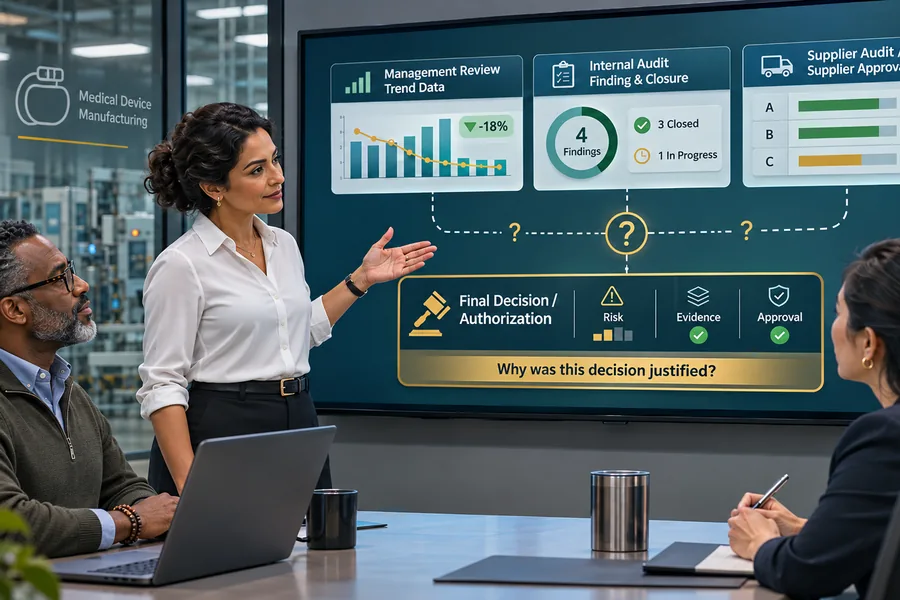 Featured perspective Regulatory Strategy The FDA can now review your management decisions. Can you explain them? A completed management review, audit closure, or supplier approval shows that an activity occurred. The record has to show why the decision was acceptable, on what evidence, and who authorized it. Read article →
 Deviations & OOS Two qualified reviewers read the same evidence and disagree. What justified the decision to proceed? Approval shows who authorized a decision, not why the evidence justified it. FDA warning letters show what the missing reasoning looks like, and a review of three past decisions shows whether yours can be explained. Read article →
 Generated Documents A tool drafted the document. Who cleared it for use, and against what? A reviewer can only check what is on the page. A requirement the draft never mentions has to be found against an independent list, and the clearance has to be on the record. Read article →
Explore the library
Insights for compliance and quality leaders
No insights match.
Documentation The FDA can now review your management decisions. Can you explain them? A completed management review, audit closure, or supplier approval shows that an activity occurred. The record has to show why the decision was acceptable, on what evidence, and who authorized it. Read article → Deviations & OOS Two qualified reviewers read the same evidence and disagree. What justified the decision to proceed? Approval shows who authorized a decision, not why the evidence justified it. FDA warning letters show what the missing reasoning looks like, and a review of three past decisions shows whether yours can be explained. Read article → Generated Documents A tool drafted the document. Who cleared it for use, and against what? A reviewer can only check what is on the page. A requirement the draft never mentions has to be found against an independent list, and the clearance has to be on the record. Read article →  Batch Release Every result passed. What did the results show, and what was concluded from them? A passing result is an observation. The release decision is a conclusion, and the record has to show the step between them. Read article →
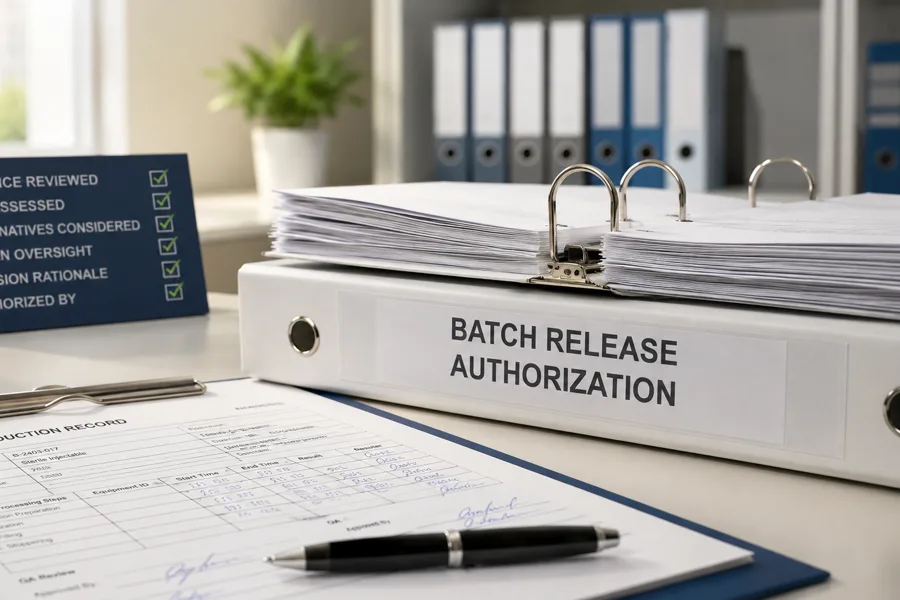 Batch Release The result is within limit. What else could explain it, and which explanation did the release rest on? Several explanations can fit the same passing result. The record has to show which were considered, what would tell them apart, and which one the decision rests on. Read article →
 Documentation The second person’s check line is blank. What establishes that the check happened? Presence, plausibility and a trusted recollection are consistent with a check. A record of the specific event, naming who did it and made at the time, is what establishes one; a later recollection guides the investigation and needs corroboration. Read article →
 CAPA Beyond Documentation: Using Intelligent Systems to Examine GMP Decisions A CAPA can be complete on paper and still leave open why the evidence was sufficient to justify closure. An interactive case examines the reasoning, not only the record. Read article →
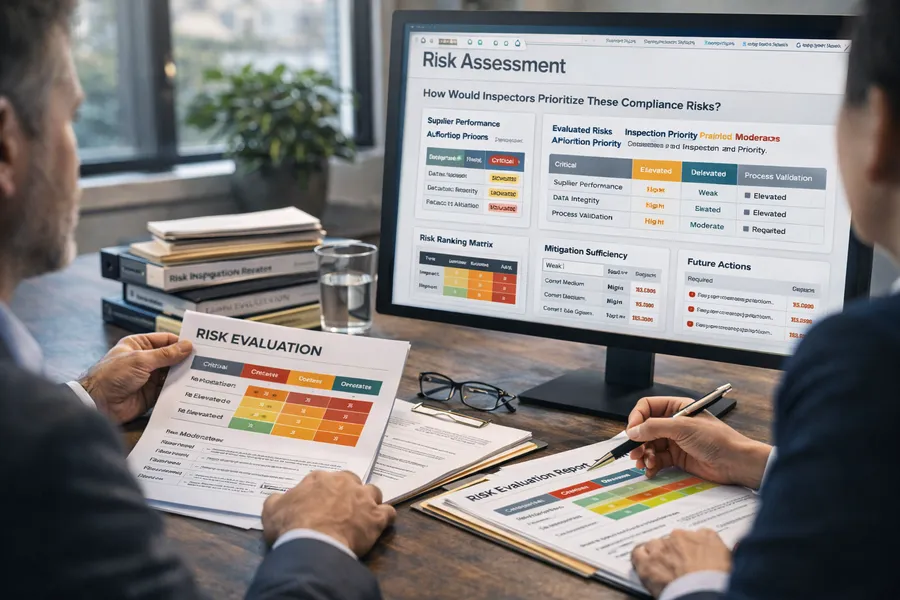 Documentation The Business of Compliance: What Quality Leaders Are Really Asking the Business to Fund Quality funding decisions shape release confidence, supply resilience, and the consequences leadership accepts. Read article →
 Documentation Manufacturing intelligence: who is accountable for the decisions it shapes? A generated answer is not a basis for action. The organization has to explain why relying on it was reasonable. Read article →
 Documentation New evidence has arrived. Does the earlier decision still stand, or does it need to be made again? A decision that was sound when made can lose part of its basis later. Filing the new evidence does not show whether the decision still holds. Read article →
 Documentation Which quality decisions would an inspector examine first, and does each record show how its conclusion was reached? Every record states a conclusion. Exposure, consequence and evidence differ, but the files look uniform until someone asks why. Read article →
 Documentation A record entry is missing. Was the work not written down, or not done? Retraining on documentation fixes a writing problem. The record has to show the gap was one before that fix is chosen. Read article →
 CAPA Your Quality decision is approved. Could an independent reviewer understand why? A completed CAPA closure shows who signed. What the record establishes, and what it leaves unanswered, is a separate question. Read article → Documentation The decision is documented. Is the reasoning? The record shows what was approved. The reasoning behind it sits across records, email and people, so the organization pays for the decision twice. Read article →
 Batch Release Who authorized the batch release, and why was release justified with this in the history? Every page is signed and the batch is released. The record rarely shows who authorized release, on what evidence, how open or borderline items were weighed, or why release was justified. Read article →
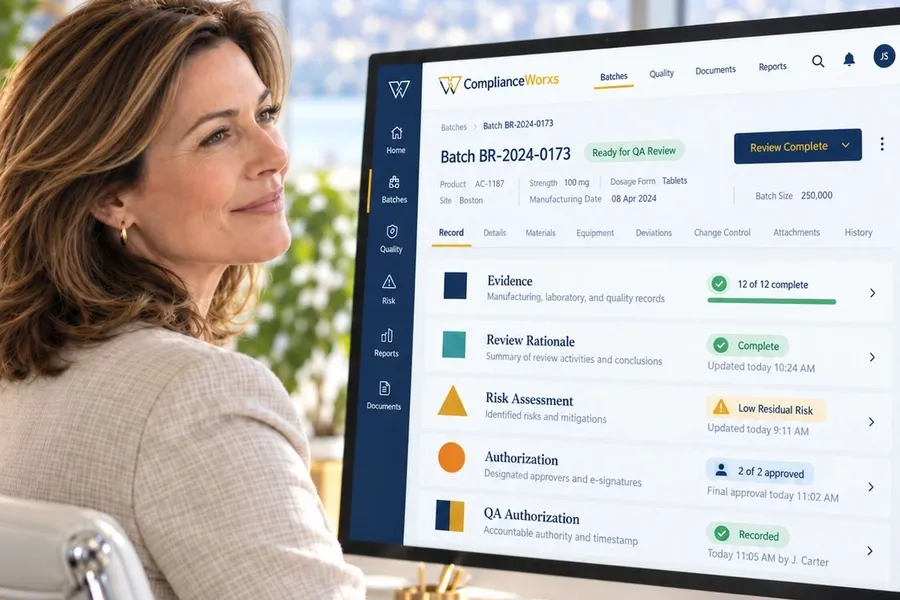 Documentation If an inspector pulled one decision, would the record answer who authorized it and why? Readiness is measured by whether documents exist. The reasoning behind one consequential decision is rarely on the record. Read article → Deviations & OOS Who authorized the deviation closure, and what was set aside? The root cause is written and the deviation is signed off. The record rarely shows who authorized closure, on what evidence, or which explanations were set aside. Read article → Documentation Good documentation proves what happened. Can your records prove why? GDP compliance is not the same as a decision record. 483 observations keep finding the difference. Read article → Documentation What evidence did this decision rely on, as opposed to what was merely available? Available records are not the evidence the decision relied on, and the record rarely says which is which. Read article →
 Change Control Validation is complete. Who authorized the change, and why was it ready? Passing validation does not answer the change-control authorization question on its own. Read article →
 Deviations & OOS A retest passed. Who authorized treating the original OOS result as resolved? A passing retest does not erase an OOS result. The record has to show why the conclusion changed. Read article →
 Documentation Could you explain this decision without reconstructing it? The record shows the outcome. The reasoning that authorized it is rebuilt after the fact. Read article →
 CAPA Who authorized this CAPA closure, and what showed it was effective? Completed actions are not proof of effectiveness. Recurrence and residual uncertainty need a recorded basis. Read article →
 Deviations & OOS The disposition survived. Can you produce the reasoning that authorized it? The deviation closed and the approval was signed. The reasoning behind it is hard to produce later. Read article →
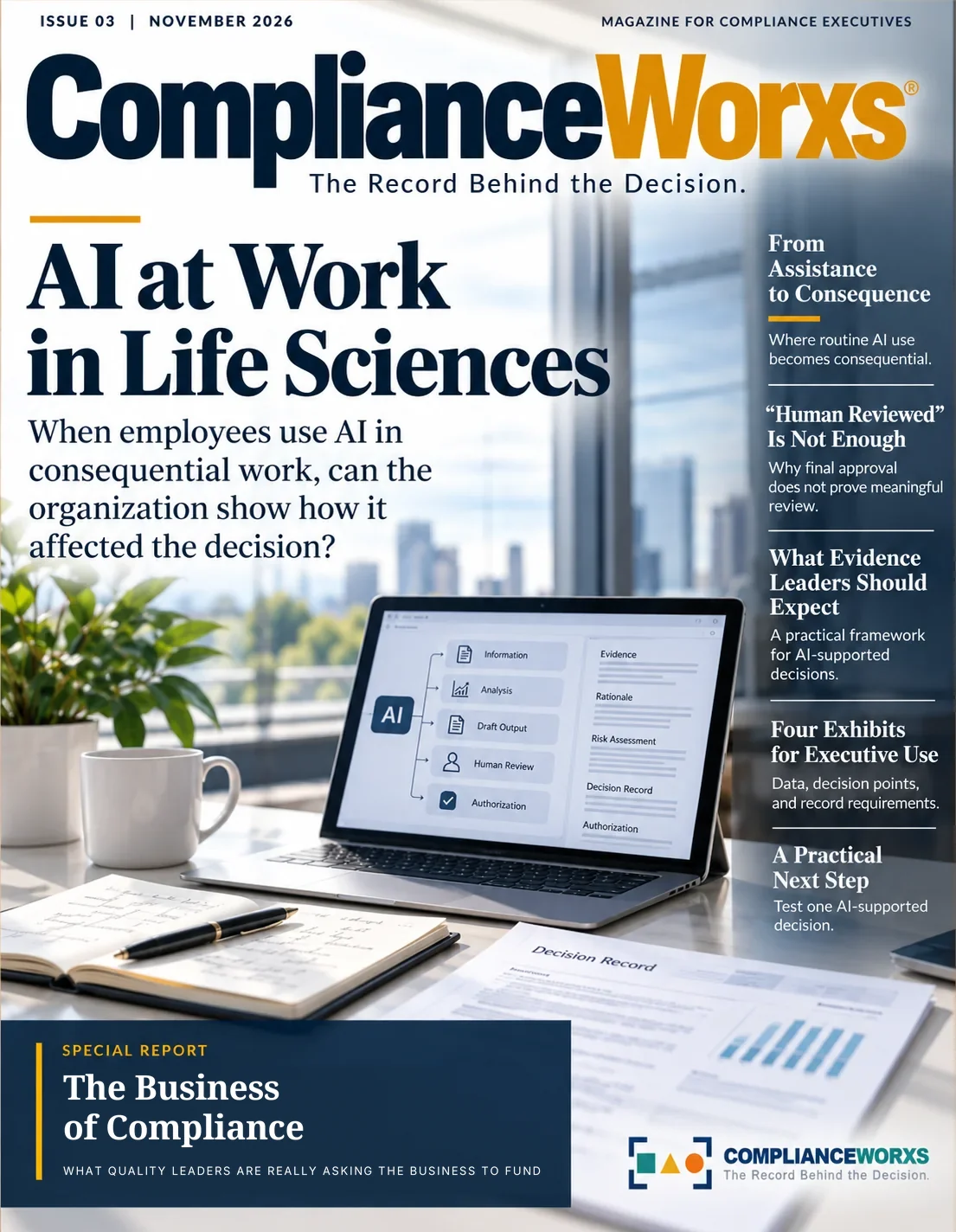
The ComplianceWorxs Magazine
Ideas and analysis for what comes next.
Explore the issues shaping life-sciences compliance and quality leadership through the ComplianceWorxs Magazine.
Issue 03 · November 2026 · AI at Work in Life Sciences. Preserving human judgment and accountability when AI influences consequential decisions.
ComplianceWorxs Content Studio
Want to reach Quality and Compliance leaders in life sciences?
See advertising options, placement formats, and upcoming issue availability.
Explore Advertising Opportunities → ComplianceWorxs Assistant Case Files · DDA · IRR English · Español · हिन्दी · 中文
Language
Ask which decision type, Case File, DDA, or IRR fits what you are working on. This is not regulatory or legal guidance. You are chatting with an assistant, not a person. Do not enter confidential records, proprietary decision facts, or sensitive documents.
Was this helpful?