Evidence
Does your record list the specific evidence the authorizer relied on?
THE FOUR LENSES · AUTHORIZATION
A signature shows that someone approved. It does not show who held the authority, what they relied on, what risk they accepted, or why proceeding was reasonable. That is what an investigator asks next.
THE SIGNATURE
An investigator asks why this batch was released with an open qualification deviation.
THE DIFFERENCE
Same release, same signature. Switch to see what an accountable authorization record adds. The reviewer should not have to infer the connection from a signature.
AUTHORIZED DECISION · TAB-0626-118
Five lines are empty. That is what a signature alone leaves for the reviewer to reconstruct.
THE REVIEWER TEST
Six months later, someone who wasn’t there has to understand why it was authorized. Answer yes or no for the decision you have in mind.
Does your record list the specific evidence the authorizer relied on?
Does it show how that evidence was weighed and which alternatives were rejected?
Does it state the residual risk that was accepted and who owns the follow-up?
Does it name who held the authority and accepted the decision, with the date and time?
ComplianceWorxs organizes the basis for a decision. It does not make, approve, or recommend the decision. Authorization does not mean the decision was correct.
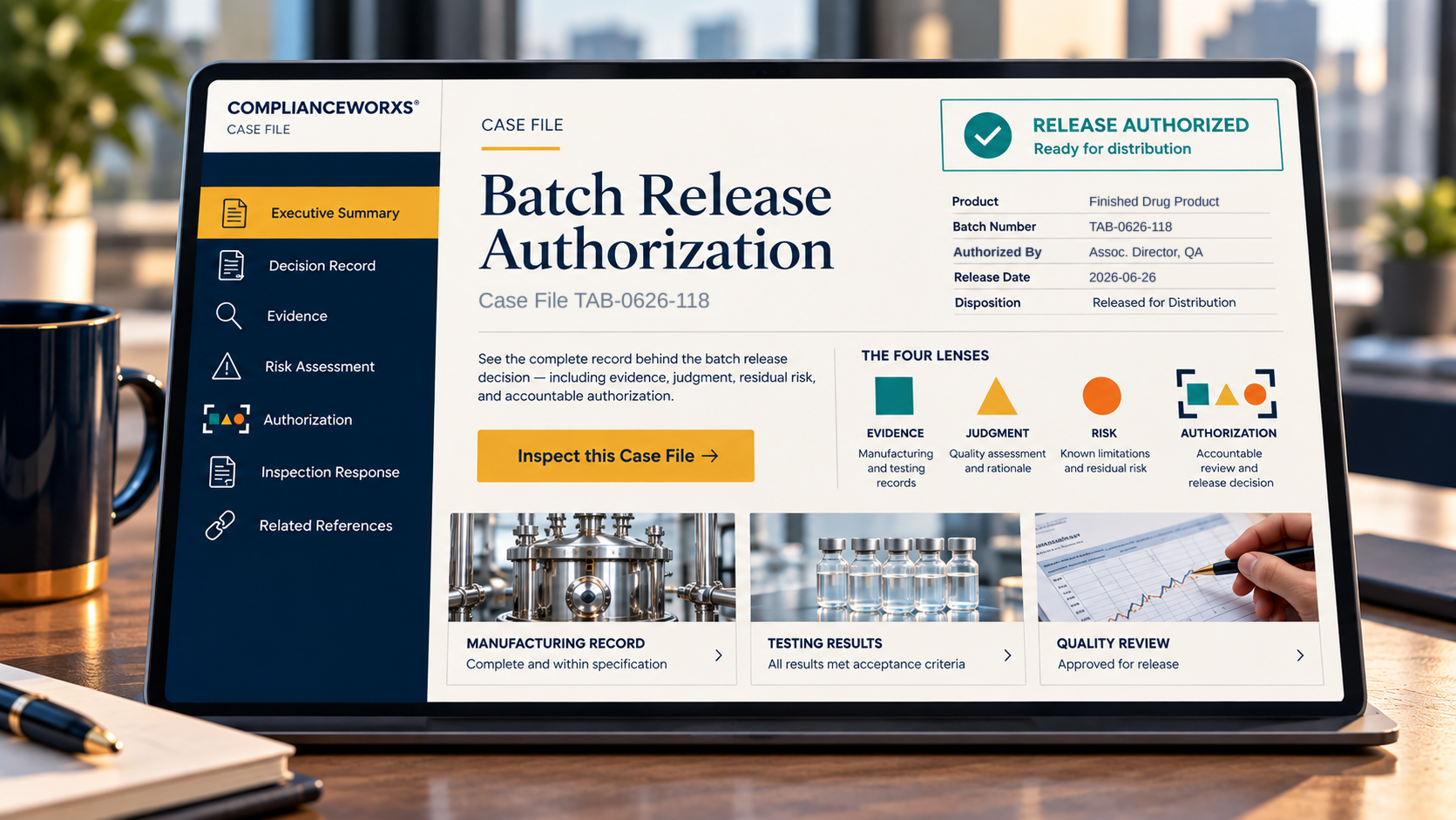
SEE IT IN THE RECORD
See how evidence, judgment, residual risk, and accountable authorization come together around one release decision. One completed case file: context, evidence, judgment, risk, and authority, delivered after payment.
$149 Case File
View the case file →